Animation Timings That Encourage Shifts From Reel Wins to Wheel Bets in Portable Gaming Apps
Written by Morgan Günther · Jun 12, 2026
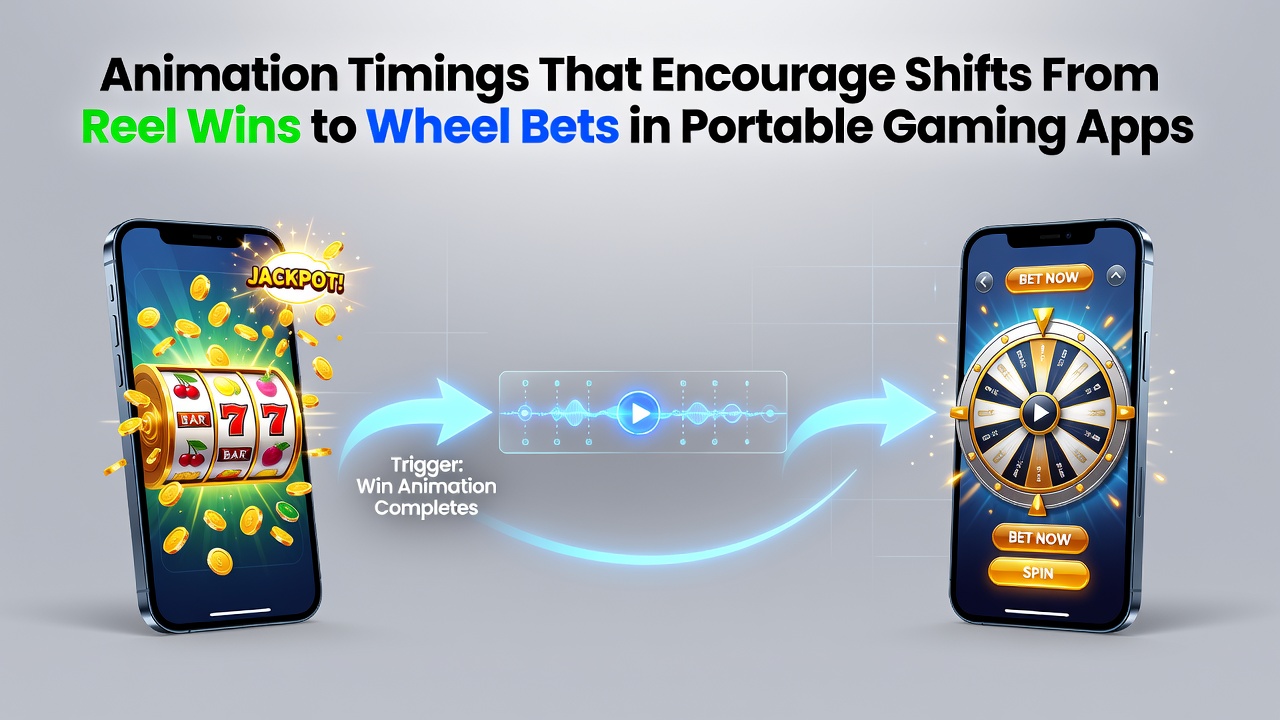
Animation Timings That Encourage Shifts From Reel Wins to Wheel Bets in Portable Gaming Apps
Developers in the portable gaming sector rely on precise animation timings to guide users from reel-based wins toward wheel bet options, and data from industry reports indicate these sequences often span between 800 and 1500 milliseconds to maintain engagement without abrupt cuts. Research from mobile platform analytics firms shows that delays calibrated around 1.2 seconds after a reel payout create natural pauses where players consider additional bet types, particularly in apps that integrate slot mechanics with roulette-style wheels.
Core Design Elements in Transition Sequences
Animation frameworks in these applications incorporate layered effects such as fading reel symbols that overlap with emerging wheel segments, while timing data collected across multiple titles reveals consistent use of easing functions that slow the final reel spin before the wheel interface expands. Observers note that developers program these shifts to align with haptic feedback pulses lasting 200 to 400 milliseconds, which reinforces the move from one mechanic to another without requiring explicit menu navigation.
Studies conducted on user session logs from 2025 through early 2026 demonstrate that apps employing staggered timing, where the wheel preview appears 300 milliseconds before full reel reset completes, record higher rates of cross-mechanic play. This approach avoids simultaneous loading of both systems, which can strain lower-end devices, and instead sequences the visual handoff to keep processing demands manageable.
Behavioral Patterns Observed in June 2026 Data
Figures released by the New Jersey Division of Gaming Enforcement highlight increased mobile session lengths during the first half of 2026, with transitions between reel and wheel features contributing to extended play windows. Developers adjust animation intervals based on these metrics, often shortening the gap between a winning reel sequence and wheel activation to under one second when targeting users who have already completed multiple spins in a single sitting.
One documented technique involves a brief overlay of coin or chip animations that bridge the two interfaces, timed to land precisely as the wheel begins its initial rotation cue. Such methods draw from earlier findings in digital interface research, where fluid visual continuity reduces hesitation and supports smoother movement between game modes.
Technical Implementation Across Platforms
Engineers working with Unity and Unreal Engine derivatives calibrate particle systems and sprite sequences so that reel symbols dissolve at rates matching the acceleration curve of the incoming wheel graphic. Data indicates that synchronization errors exceeding 150 milliseconds correlate with lower transition success, prompting teams to incorporate real-time device performance checks that dynamically adjust timing within a 100-millisecond window.
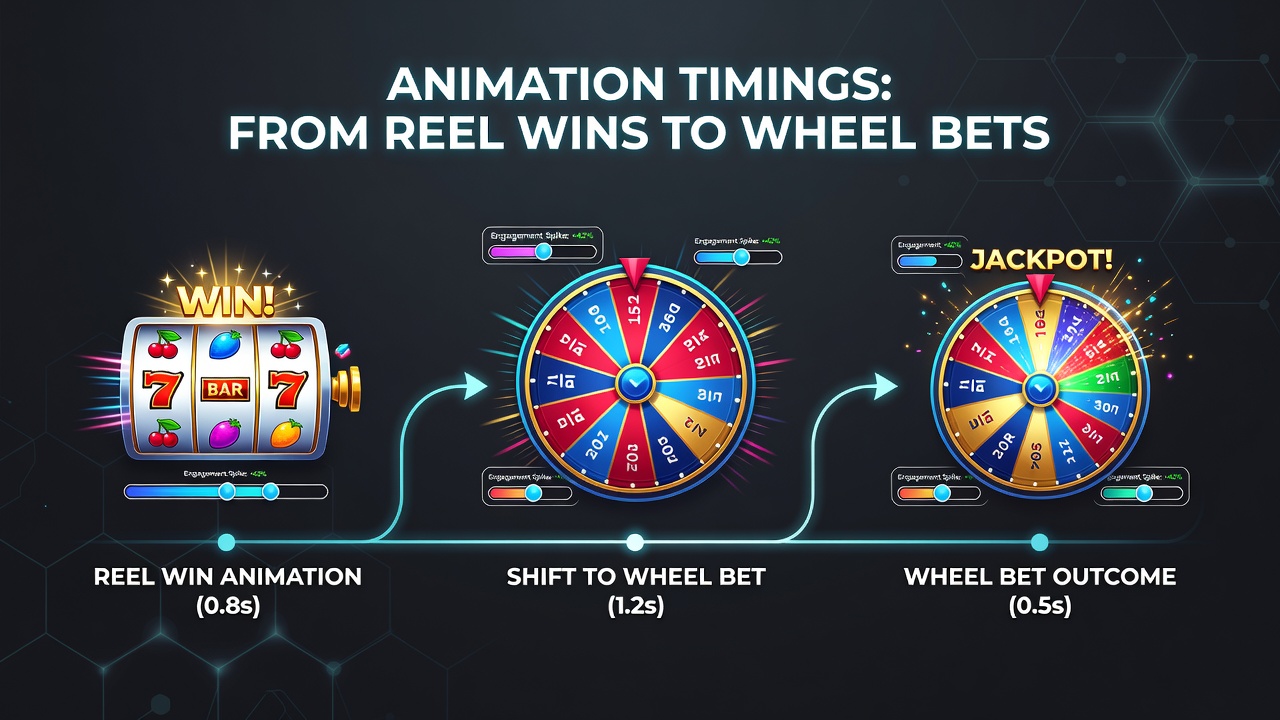
Platform-specific variations appear in iOS versus Android deployments, where iOS versions often extend the transition window by an additional 250 milliseconds to accommodate differences in rendering pipelines. Industry organizations tracking these patterns report that cross-platform consistency improves when developers reference shared timing libraries updated quarterly.
Regional Regulatory Context and Reporting Standards
According to guidelines from the Nevada Gaming Control Board, animation sequences must remain transparent in their pacing so that players retain clear awareness of each mechanic switch. Reports filed through mid-2026 note that operators submit detailed logs of transition timings as part of compliance reviews, allowing regulators to verify that sequences do not exceed thresholds that could obscure game state changes.
Academic examinations of player flow in digital environments, including work referenced by the Australian Institute of Criminology, examine how these calibrated delays influence movement between reel and wheel features across licensed markets. The findings emphasize measurable differences in session composition when timings fall within established ranges versus those outside them.
Future Adjustments Based on Current Metrics
Teams continue to refine these timings using aggregated session data, with particular attention to peak hours in June 2026 when portable usage spikes coincide with major sporting calendars. Adjustments typically involve micro-variations of 50 to 100 milliseconds tested across sample user groups before wider rollout. Such iterative processes rely on A/B frameworks that isolate the effect of specific animation intervals on the frequency of reel-to-wheel shifts.
Conclusion
Animation timings function as a central mechanism for directing attention between reel wins and wheel bets in portable gaming applications, supported by performance data and regulatory documentation from multiple jurisdictions. Continued monitoring through 2026 shows these sequences evolving in response to device capabilities and session analytics, while remaining within established compliance parameters set by oversight bodies.