Haptic Feedback Loops: How Touch Vibrations Guide Reel Stops and Wheel Landings in Regulated App Environments
Written by Ines Schmidt · Aug 23, 2026
Haptic Feedback Loops: How Touch Vibrations Guide Reel Stops and Wheel Landings in Regulated App Environments
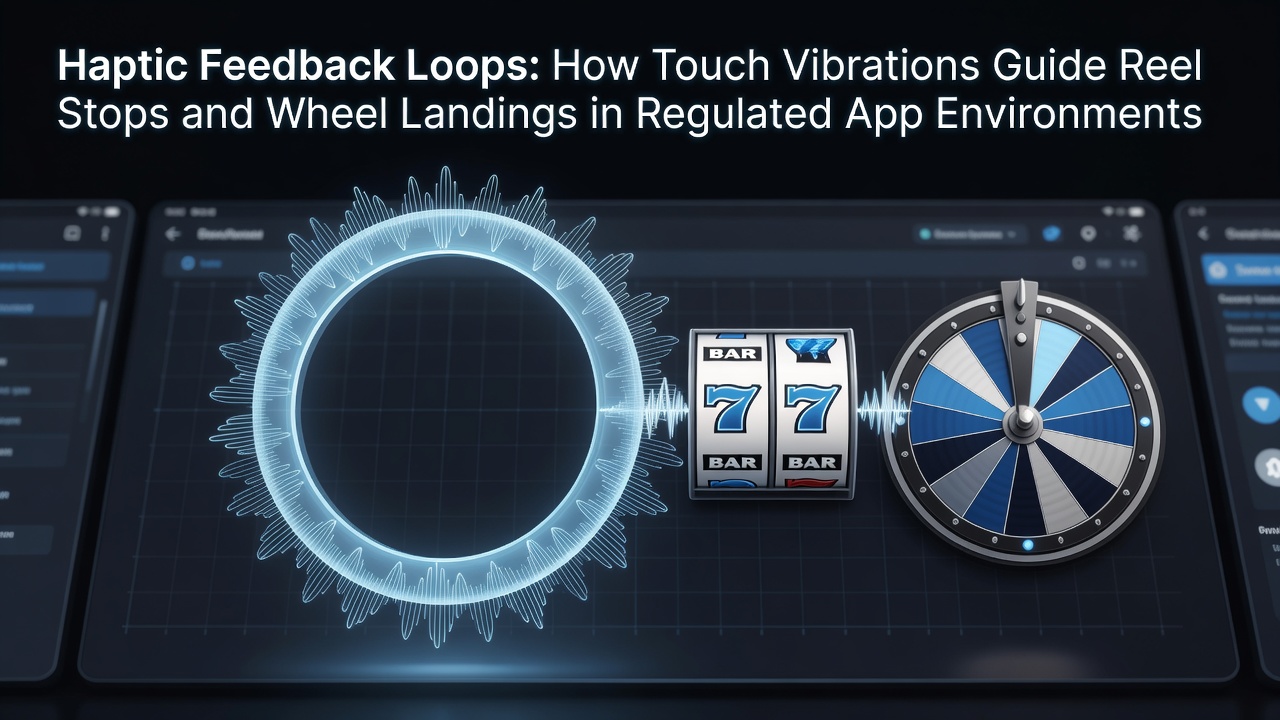
Regulated mobile gambling applications rely on haptic feedback systems to enhance user interaction with digital reels and wheels, and these mechanisms deliver precise vibration patterns that correspond to game events such as symbol alignments or ball settlements. Developers integrate actuators into smartphone hardware so that short pulses mark the beginning of a spin sequence while longer sustained vibrations signal deceleration phases. In this setup the feedback remains synchronized with random number generator outputs that determine actual results, and regulatory frameworks require independent testing to confirm that vibrations do not alter probability distributions.
Core Components of Haptic Systems in Gaming Applications
Modern devices contain linear resonant actuators and eccentric rotating mass motors that produce distinct frequency ranges, and software layers translate game state data into timed signals sent to these components. When a slot reel approaches its final position the application triggers a series of micro-vibrations whose intensity increases as the stopping point nears. Roulette wheels follow similar logic where the ball icon generates escalating pulses that peak at the moment it settles into a pocket. Observers note that these patterns replicate the tactile cues once experienced on physical machines, and the digital versions maintain consistency across different device models through calibration profiles supplied by manufacturers.
Regulatory Oversight of Feedback Implementation
Authorities in multiple jurisdictions mandate that haptic elements undergo review alongside core game logic to verify compliance with fairness standards. The New Jersey Division of Gaming Enforcement requires operators to submit detailed documentation showing that vibration sequences activate only after outcome calculation completes. Similar requirements appear in Ontario where the Alcohol and Gaming Commission examines whether feedback loops introduce any perceptible bias toward particular outcomes. Testing laboratories run thousands of automated cycles while monitoring both visual displays and haptic output to ensure synchronization remains within acceptable tolerances.
August 2026 brought updated technical bulletins from several state regulators that clarified acceptable latency windows between random result generation and the onset of corresponding vibrations. These guidelines emerged after field reports indicated minor timing discrepancies on certain older handset models, and subsequent firmware adjustments resolved the gaps without changing game mathematics. Data collected during this period showed that properly calibrated systems maintained player engagement metrics at previous levels while satisfying new audit criteria.
Technical Execution of Reel Stops and Wheel Landings
Slot applications process reel stop positions by mapping random values to specific symbol coordinates, and once those coordinates are fixed the haptic controller receives a command to initiate a deceleration sequence. The sequence typically consists of three distinct phases: an initial broad pulse that indicates the reel has entered its final rotation, a series of diminishing taps that simulate mechanical friction, and a conclusive sharp vibration that marks the exact landing. Wheel games operate under comparable timing constraints, and the ball trajectory receives progressive feedback that intensifies as angular velocity decreases. Engineers achieve this effect by modulating both amplitude and frequency curves stored in lookup tables that reference the underlying random outcome.
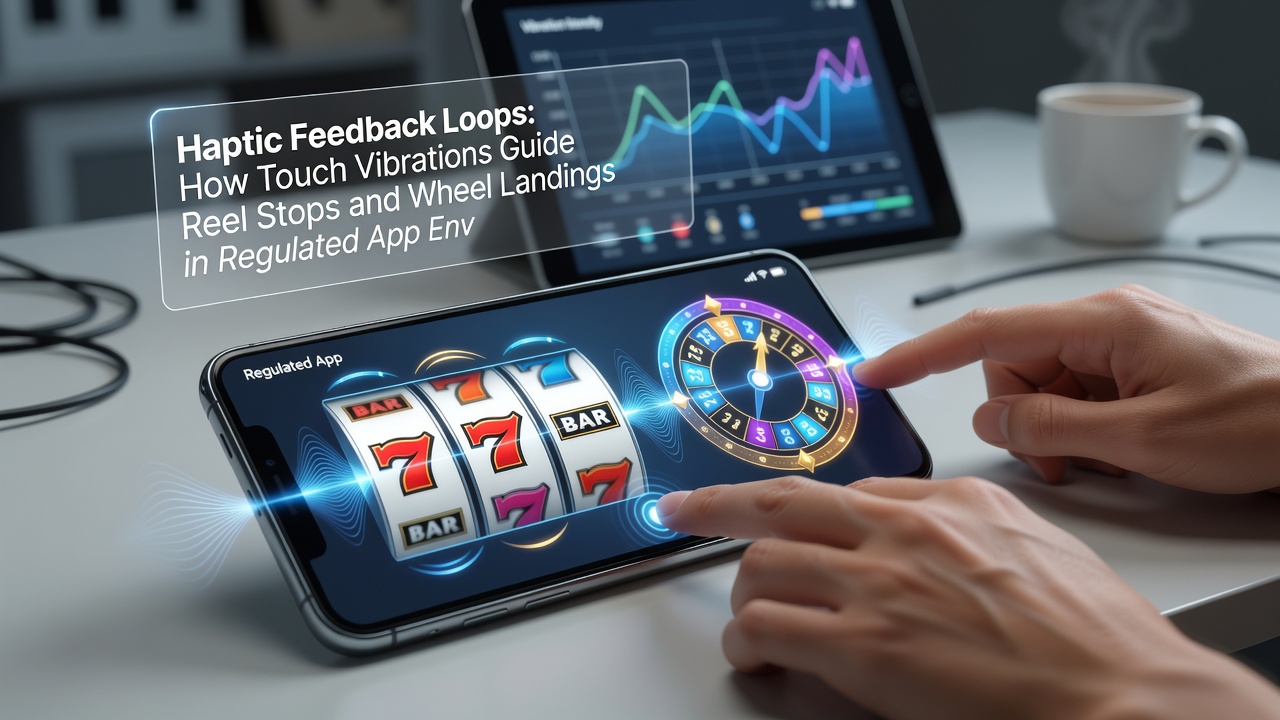
Studies conducted by academic research groups have examined user perception of these feedback patterns across large participant pools, and findings indicate that players associate specific pulse rhythms with particular game stages even when visual cues are temporarily obscured. This cross-modal correspondence supports accessibility goals by providing an additional sensory channel for individuals who benefit from non-visual indicators. At the same time regulatory specifications prohibit any feedback pattern from conveying predictive information about future results, and compliance teams routinely inspect code repositories to confirm that vibration triggers remain strictly post-determination events.
Integration Challenges Across Device Ecosystems
Application developers must account for hardware variations between flagship phones and mid-range models, and each platform supplies distinct application programming interfaces for accessing haptic hardware. Calibration routines run during initial app launch to measure actuator response times and adjust signal durations accordingly. When updates to operating systems introduce new vibration APIs, operators schedule phased rollouts that include fresh certification submissions to maintain regulatory approval. The process ensures that players experience consistent tactile guidance regardless of the device they use, and logs from production environments track any deviations that exceed predefined thresholds.
Security and Integrity Measures
Encrypted channels carry haptic command data between the game server and client device, and checksum validations confirm that no unauthorized modifications occur during transmission. Regulators in Australia have incorporated similar encryption requirements into their technical standards, and operators reference guidelines issued by state gaming authorities to align their implementations. Audit trails capture every instance where a vibration sequence activates, allowing investigators to cross-reference timing data against random number generator logs in the event of a dispute.
Industry reports compiled by independent research organizations reveal that properly implemented haptic loops contribute to session continuity by reinforcing the natural rhythm of play without influencing betting decisions. These reports also document that regulated environments continue to prioritize transparency in all sensory feedback mechanisms, and ongoing collaboration between engineers and compliance specialists has produced standardized test suites that evaluate both performance and regulatory adherence.
Conclusion
Haptic feedback loops in regulated mobile applications function as synchronized extensions of core game engines, delivering vibration sequences that align with reel stops and wheel landings after outcomes are determined. Regulatory bodies across multiple regions enforce verification protocols that separate sensory presentation from probability calculations, and technical standards continue to evolve in response to hardware advancements and operational data. The result is an environment where tactile guidance enhances interaction while preserving the integrity required by licensing authorities.