How synchronization of bonus triggers across reel sequences and wheel spins shapes session flows in multi-platform gambling apps under varying licensing rules
Written by Mia Werner · Jul 28, 2026
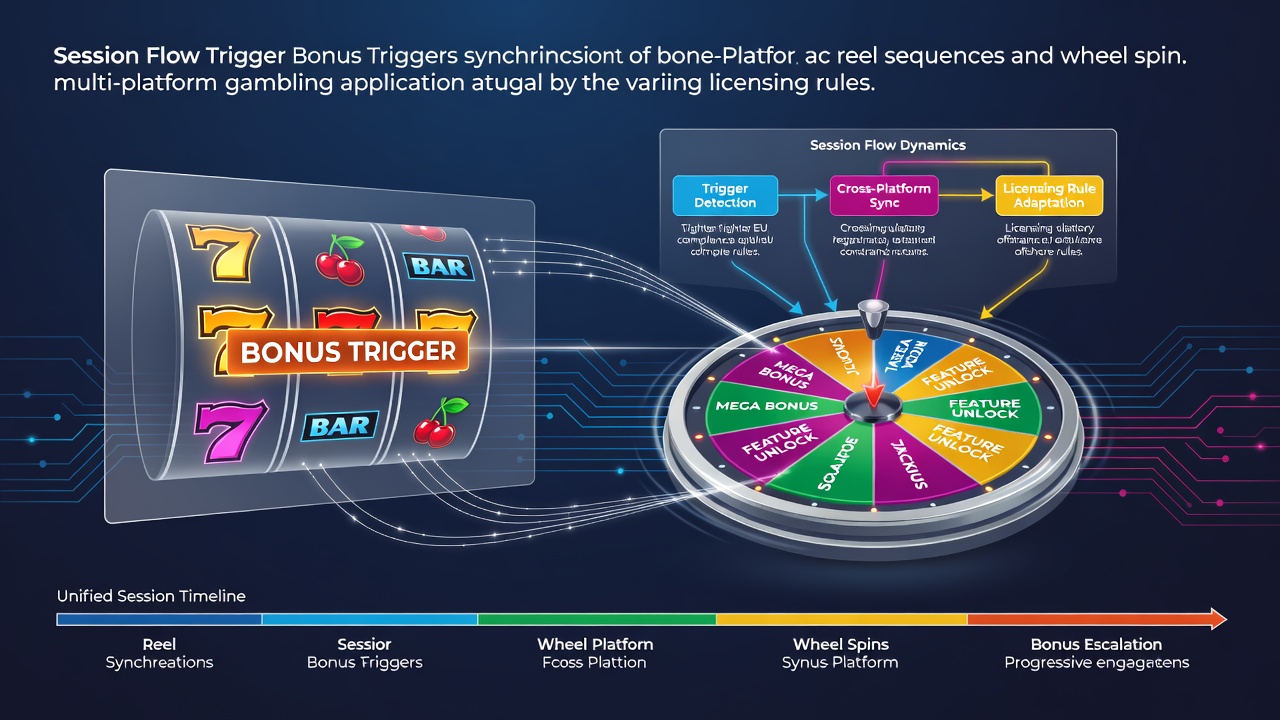
How synchronization of bonus triggers across reel sequences and wheel spins shapes session flows in multi-platform gambling apps under varying licensing rules
Operators in regulated markets deploy synchronization protocols that align bonus activations between reel-based sequences and wheel spin events, allowing session continuity across mobile and desktop platforms. These protocols time rewards so that a multiplier earned on reels can carry over to a wheel feature without resetting player progress, and data from multiple jurisdictions shows this approach extends average play duration by coordinating random number generators under strict per-game certification rules. **Mechanics Behind Cross-Feature Bonus Alignment**
Reel sequences generate base triggers through symbol combinations, while wheel spins operate on independent cycles that draw from separate prize pools. Synchronization layers overlay a shared event queue that monitors both systems, firing secondary bonuses only when licensing conditions permit shared state variables. In practice this means a three-scatter event on reels can queue a wheel multiplier that activates on the next spin cycle, provided the operator holds a license that allows aggregated randomness across game types. Observers note that session flows change when these queues respect platform-specific latency buffers. Mobile apps buffer wheel animations longer than desktop versions to match network conditions, yet the underlying trigger remains identical. This keeps payout timing consistent even as players switch devices mid-session. **Licensing Rules That Govern Shared Triggers**
Different regulatory frameworks impose distinct constraints on how bonus states transfer between reels and wheels. Licenses issued in New Jersey require separate certification for each game mechanic, which limits full synchronization to non-monetary progress indicators only. In contrast, frameworks managed through the Malta Gaming Authority permit shared random seeds across certified titles when operators submit unified audit logs that demonstrate equivalent return-to-player percentages. Data indicates that July 2026 brought updated technical standards in several European markets requiring real-time logging of cross-game bonus handoffs. These rules force operators to timestamp every state transfer so regulators can verify that synchronization does not create unintended prize clustering. Pennsylvania's gaming control framework, meanwhile, focuses on player-fund segregation, meaning synced bonuses must draw from distinct wallet ledgers even when the visual experience feels continuous. **Impact on Multi-Platform Session Patterns**
Players who move between smartphone and tablet versions encounter session flows shaped by license-mandated cooldown periods. When a reel bonus activates, licensing rules in some regions mandate a minimum interval before a wheel feature can award additional value. Operators satisfy this by inserting neutral spin animations that maintain engagement without violating interval requirements. Research from the Australian Gambling Research Centre reveals that synchronized systems increase cross-device continuity rates when cooldown timers align with natural loading sequences. The same studies show that jurisdictions enforcing strict per-device RNG isolation experience shorter average sessions because players encounter more frequent state resets upon switching platforms. 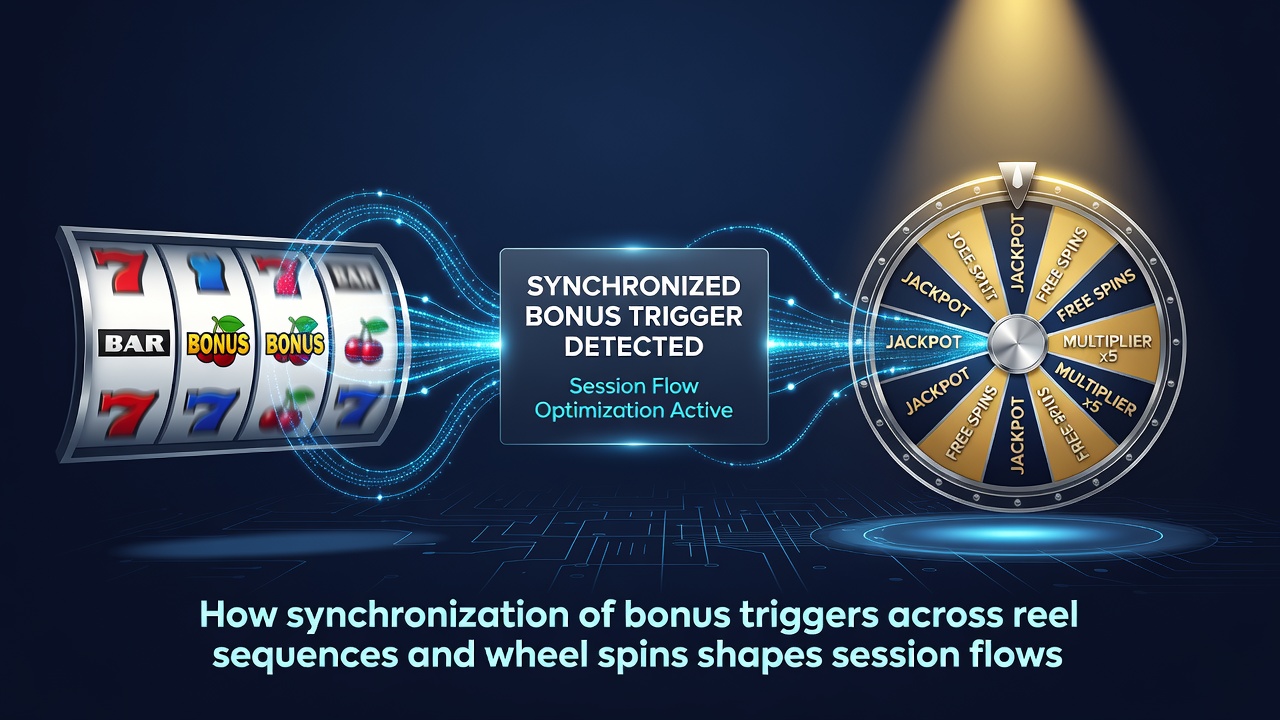 **Regional Differences in Implementation**
North American markets tend to segment bonus synchronization by game category, treating reel sequences and wheel spins as distinct products even within the same app. This segmentation stems from licensing language that classifies wheels as table-game equivalents. European licenses often group both under a single entertainment category, allowing tighter trigger coupling provided overall game mathematics remain within approved bounds. One industry report prepared for Canadian provincial regulators documented how synchronization protocols must recalibrate prize weighting whenever a player crosses provincial boundaries, since each province maintains its own licensing criteria for bonus aggregation. These recalibrations occur server-side without interrupting the visible session flow. **Technical Safeguards and Audit Requirements**
Operators embed checksum routines that verify bonus state integrity at every synchronization point. Licensing bodies require these routines to log both successful and failed handoffs, creating audit trails that regulators examine during periodic reviews. When a reel-to-wheel transfer fails validation, the system rolls back the queued bonus and credits the player through the original game instead, preserving compliance. Such rollback mechanisms appear more frequently in markets that updated their technical standards after July 2026, reflecting heightened scrutiny of cross-feature prize distribution. The result is session flows that feel fluid to players yet remain fully traceable for compliance teams. **Conclusion**
Synchronization of bonus triggers across reel sequences and wheel spins operates within boundaries set by each jurisdiction's licensing regime. These boundaries determine how state information travels between game types and across devices, directly influencing how long players remain engaged before encountering a regulatory reset or cooldown. Continued refinement of logging standards and device-agnostic certification processes will shape future session architectures in multi-platform gambling environments.
**Regional Differences in Implementation**
North American markets tend to segment bonus synchronization by game category, treating reel sequences and wheel spins as distinct products even within the same app. This segmentation stems from licensing language that classifies wheels as table-game equivalents. European licenses often group both under a single entertainment category, allowing tighter trigger coupling provided overall game mathematics remain within approved bounds. One industry report prepared for Canadian provincial regulators documented how synchronization protocols must recalibrate prize weighting whenever a player crosses provincial boundaries, since each province maintains its own licensing criteria for bonus aggregation. These recalibrations occur server-side without interrupting the visible session flow. **Technical Safeguards and Audit Requirements**
Operators embed checksum routines that verify bonus state integrity at every synchronization point. Licensing bodies require these routines to log both successful and failed handoffs, creating audit trails that regulators examine during periodic reviews. When a reel-to-wheel transfer fails validation, the system rolls back the queued bonus and credits the player through the original game instead, preserving compliance. Such rollback mechanisms appear more frequently in markets that updated their technical standards after July 2026, reflecting heightened scrutiny of cross-feature prize distribution. The result is session flows that feel fluid to players yet remain fully traceable for compliance teams. **Conclusion**
Synchronization of bonus triggers across reel sequences and wheel spins operates within boundaries set by each jurisdiction's licensing regime. These boundaries determine how state information travels between game types and across devices, directly influencing how long players remain engaged before encountering a regulatory reset or cooldown. Continued refinement of logging standards and device-agnostic certification processes will shape future session architectures in multi-platform gambling environments.
Operators in regulated markets deploy synchronization protocols that align bonus activations between reel-based sequences and wheel spin events, allowing session continuity across mobile and desktop platforms. These protocols time rewards so that a multiplier earned on reels can carry over to a wheel feature without resetting player progress, and data from multiple jurisdictions shows this approach extends average play duration by coordinating random number generators under strict per-game certification rules. **Mechanics Behind Cross-Feature Bonus Alignment**
Reel sequences generate base triggers through symbol combinations, while wheel spins operate on independent cycles that draw from separate prize pools. Synchronization layers overlay a shared event queue that monitors both systems, firing secondary bonuses only when licensing conditions permit shared state variables. In practice this means a three-scatter event on reels can queue a wheel multiplier that activates on the next spin cycle, provided the operator holds a license that allows aggregated randomness across game types. Observers note that session flows change when these queues respect platform-specific latency buffers. Mobile apps buffer wheel animations longer than desktop versions to match network conditions, yet the underlying trigger remains identical. This keeps payout timing consistent even as players switch devices mid-session. **Licensing Rules That Govern Shared Triggers**
Different regulatory frameworks impose distinct constraints on how bonus states transfer between reels and wheels. Licenses issued in New Jersey require separate certification for each game mechanic, which limits full synchronization to non-monetary progress indicators only. In contrast, frameworks managed through the Malta Gaming Authority permit shared random seeds across certified titles when operators submit unified audit logs that demonstrate equivalent return-to-player percentages. Data indicates that July 2026 brought updated technical standards in several European markets requiring real-time logging of cross-game bonus handoffs. These rules force operators to timestamp every state transfer so regulators can verify that synchronization does not create unintended prize clustering. Pennsylvania's gaming control framework, meanwhile, focuses on player-fund segregation, meaning synced bonuses must draw from distinct wallet ledgers even when the visual experience feels continuous. **Impact on Multi-Platform Session Patterns**
Players who move between smartphone and tablet versions encounter session flows shaped by license-mandated cooldown periods. When a reel bonus activates, licensing rules in some regions mandate a minimum interval before a wheel feature can award additional value. Operators satisfy this by inserting neutral spin animations that maintain engagement without violating interval requirements. Research from the Australian Gambling Research Centre reveals that synchronized systems increase cross-device continuity rates when cooldown timers align with natural loading sequences. The same studies show that jurisdictions enforcing strict per-device RNG isolation experience shorter average sessions because players encounter more frequent state resets upon switching platforms.
**Regional Differences in Implementation**
North American markets tend to segment bonus synchronization by game category, treating reel sequences and wheel spins as distinct products even within the same app. This segmentation stems from licensing language that classifies wheels as table-game equivalents. European licenses often group both under a single entertainment category, allowing tighter trigger coupling provided overall game mathematics remain within approved bounds. One industry report prepared for Canadian provincial regulators documented how synchronization protocols must recalibrate prize weighting whenever a player crosses provincial boundaries, since each province maintains its own licensing criteria for bonus aggregation. These recalibrations occur server-side without interrupting the visible session flow. **Technical Safeguards and Audit Requirements**
Operators embed checksum routines that verify bonus state integrity at every synchronization point. Licensing bodies require these routines to log both successful and failed handoffs, creating audit trails that regulators examine during periodic reviews. When a reel-to-wheel transfer fails validation, the system rolls back the queued bonus and credits the player through the original game instead, preserving compliance. Such rollback mechanisms appear more frequently in markets that updated their technical standards after July 2026, reflecting heightened scrutiny of cross-feature prize distribution. The result is session flows that feel fluid to players yet remain fully traceable for compliance teams. **Conclusion**
Synchronization of bonus triggers across reel sequences and wheel spins operates within boundaries set by each jurisdiction's licensing regime. These boundaries determine how state information travels between game types and across devices, directly influencing how long players remain engaged before encountering a regulatory reset or cooldown. Continued refinement of logging standards and device-agnostic certification processes will shape future session architectures in multi-platform gambling environments.