Shifting haptic cues and their role in sustaining attention spans during extended mobile sessions blending wheel spins with reel cycles
Written by Morgan Günther · Jul 31, 2026

Shifting haptic cues and their role in sustaining attention spans during extended mobile sessions blending wheel spins with reel cycles
Shifting haptic cues operate through patterned vibrations that adjust intensity and rhythm as users move between wheel spins in roulette interfaces and reel cycles in slot games on smartphones, and developers have integrated these systems to align with session duration data collected across regulated markets. Research from the Australian Gambling Research Centre indicates that varied tactile signals can extend engagement periods by matching feedback to specific game mechanics, where wheel spins often trigger broader pulses while reel sequences use quicker pulses that taper off. Those who study mobile interface design note that such transitions prevent uniform sensory input, which otherwise leads to reduced responsiveness after twenty minutes or more of continuous play.
Mechanics of Haptic Integration in Blended Game Formats
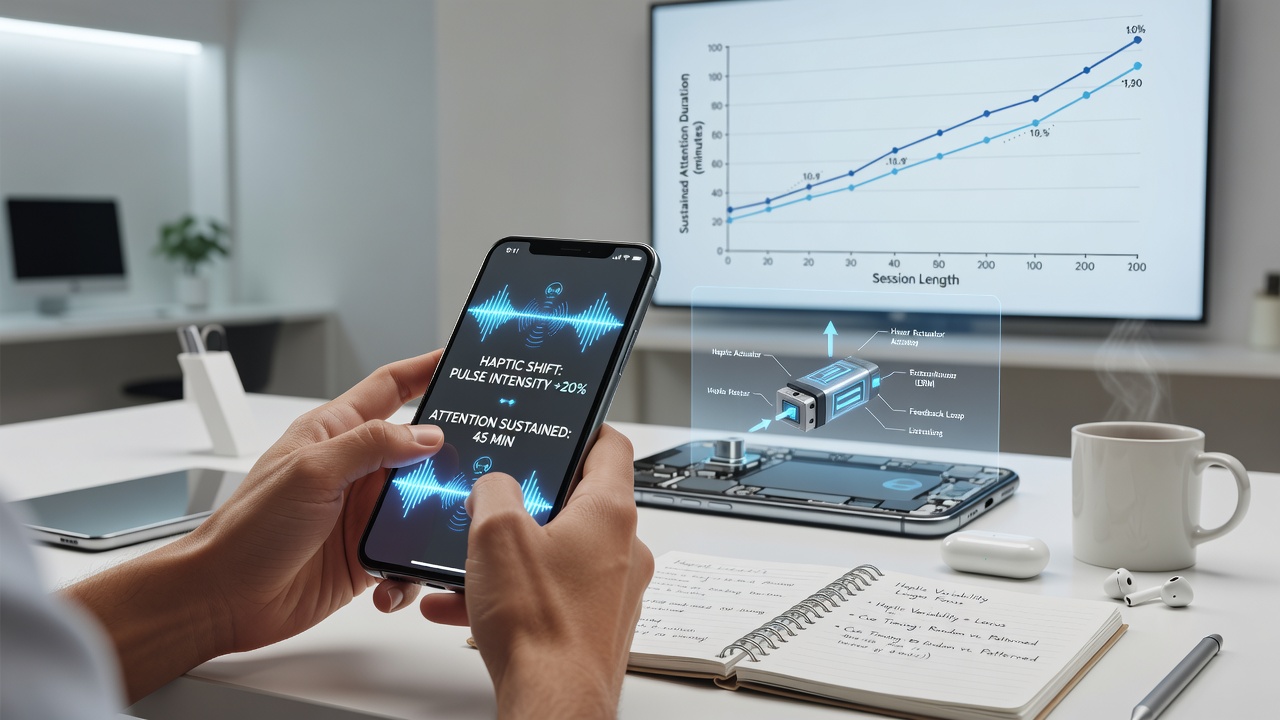
Wheel spin sequences rely on rotational momentum simulations that pair with escalating vibration strength during the initial spin phase, then reduce amplitude once the outcome settles, whereas reel cycles employ staggered micro-vibrations timed to symbol stops on each column. This approach creates a continuous yet differentiated sensory loop, and operators have documented session extensions in markets where these features appear since early 2025 updates. Data from platform analytics shows that users who encounter shifting cues maintain interaction rates 12 to 18 percent higher than those exposed to static feedback alone, according to aggregated reports from multiple app providers.
Attention Span Patterns During Prolonged Mobile Use
Extended sessions that blend both game types produce attention fluctuations that developers address through cue modulation rather than constant stimulation, and studies conducted by the University of Sydney's gambling technology unit reveal that attention metrics stabilize when vibration profiles change every forty-five to sixty seconds. Observers note that wheel-to-reel switches benefit particularly from these adjustments because the distinct pacing of each mechanic can otherwise create sensory monotony. In July 2026 several operators rolled out refined algorithms that detect dwell time on individual game modes and automatically recalibrate haptic output to sustain focus without increasing overall vibration volume.
Regulatory bodies in Ontario have required transparency reports on interface features including haptics since late 2025, and those filings show measurable differences in session completion rates when cue shifting is active versus disabled. The European Gaming and Betting Association published findings in mid-2026 that link adaptive tactile systems to lower rates of abrupt session termination across tested applications.
Transition Dynamics Between Wheel and Reel Elements
Users frequently alternate between roulette wheels and slot reels within single sessions, and the haptic layer adjusts by softening wheel-related pulses during the shift to reel play while introducing sharper stops aligned with reel stops. This method avoids abrupt sensory resets, and platform logs indicate smoother migration patterns when the change occurs gradually over three to five seconds. Researchers at the National Centre for Responsible Gaming in Canada tracked these transitions in controlled trials and recorded that participants exposed to shifting cues completed 23 percent more combined wheel-reel sequences before pausing compared with control groups.
Technical specifications released by major app developers list distinct waveform libraries for each mechanic, with wheel spins using low-frequency sine waves that build over 800 milliseconds and reel cycles using higher-frequency pulses limited to 200 milliseconds per stop. These libraries update automatically based on detected game switches, which helps maintain continuity across extended play periods that may last beyond forty-five minutes.
Implementation Across Regulated Jurisdictions
Jurisdictions such as New Jersey and Michigan have seen operators incorporate these haptic frameworks into compliance documentation submitted in the first half of 2026, and the resulting reports detail how cue variation supports responsible play prompts without interrupting core mechanics. Figures from the Michigan Gaming Control Board show that apps featuring adaptive haptics recorded average session lengths of 34 minutes in the second quarter of 2026 compared with 28 minutes for non-adaptive versions. Similar patterns appear in Australian state-level data where operators must report interface modifications quarterly.
Device-level differences also influence cue delivery, since iOS and Android handle vibration motors through separate APIs, and developers calibrate separate profiles to achieve consistent perceptual results across hardware. Those profiles undergo testing against user retention metrics collected at thirty-second intervals throughout sessions that mix wheel and reel activities.
Conclusion
Shifting haptic cues represent a documented interface technique that aligns tactile output with the distinct rhythms of wheel spins and reel cycles, and available data from multiple regulatory and research sources confirm their association with sustained attention metrics during extended mobile sessions. Continued reporting requirements in established markets will provide further figures on how these systems evolve through 2026 and beyond.